
Things to Do in La Cala de Mijas
La Cala de Mijas is best known for its beach and golf resort, but the town has more going on than that. Here is what to do on a day or weekend visit, including a few things most visitors miss.

By Anna Collins
Updated 9 April 2026
La Cala de Mijas works well as a day trip from Fuengirola or Marbella, and even better as a base for two or three nights if you want a quieter version of the Costa del Sol. The beach is the main draw, the golf resort the second, but the town rewards some wandering and makes a useful starting point for the Sierra de Mijas hills above.
This isn't a theme-park destination. There is no main strip of attractions to work through. What La Cala does well, it does very well: a long Blue Flag beach, a Moorish watchtower with some of the best views on this stretch of coast, a coastal path you can walk at your own pace, and a village centre that functions as an actual village rather than a tourist trap. The pace suits it.
Plan a couple of days and you will cover most of what is here without rushing.
Torre de la Batería
The watchtower at the eastern end of the beach is La Cala's most underrated attraction. It is a 16th-century Moorish defensive tower, one of a chain of signal towers built along the coast to warn against pirate raids, and it is in good condition. Entry costs €1.
The climb takes 10 to 15 minutes on foot from the main beach, following the path that rises above the rocky headland. Once you are at the top, the views open up across the full length of the beach, back over the village rooftops and up into the Sierra de Mijas. On a clear morning, the North African coast is visible on the horizon.
Timing matters here. Come at sunrise or in the hour before if you want the best light — the tower faces east and catches the early sun directly. Photographers tend to arrive well before 8am in summer. The path gets hot later in the day and there is no shade above the beach, so early is better for that reason alone.
Parking close to the tower is limited in August. Walk from the beach and save yourself the trouble.
The Coastal Walk: Sendero Litoral
The Sendero Litoral is a cliffside coastal path that runs from La Cala eastward toward Cabopino. It has a 4.8-star rating from 680 Google reviews, which is high for a walking route and is deserved. The full stretch to Cabopino is around 6 kilometres and takes roughly 90 minutes at an easy pace.
The path follows the clifftop above a rocky shoreline, with sea views the whole way. There are benches every few hundred metres and the track is wide and well-maintained. You do not need walking boots, though flat-soled shoes are better than flip-flops on the rougher sections. No gear is required beyond water and some sun protection.
The best time to walk it is spring or autumn, when the temperature is 18 to 22 degrees and the path is quiet. In summer it is manageable before 9am, but by 10am the sun is already strong and there is almost no shade on the exposed cliff sections. I would not attempt it between noon and 4pm in July or August.
The route to Cabopino passes a couple of small beaches below the cliffs, none of which are easily accessible on foot. You can turn back at any point; most people walk 2 or 3 kilometres and return when the views start to repeat.
The Beaches
The main beach, Playa de La Cala, is a broad Blue Flag beach of about 1.5 kilometres. The sand is fairly coarse by Malaga coast standards but the water is calm and clear, and the chiringuitos along the promenade are good. Arrive before 10am in July and August if you want a lounger without paying sun-bed prices. The water is warm enough for swimming from late May through October.
For a quieter option, Playa El Bombo is the local tip. It sits in a small bay near the eastern end of town, away from the main beach concessions, and it rarely gets crowded even in high season. Locals tend to use it over the main beach when they want to avoid the summer crowds.
Watersports hire operates from the main beach in summer (June to September roughly). Paddleboards, kayaks and jet skis are all available directly on the sand — prices vary by operator and season, so check at the beach rather than book ahead. The water conditions are calm most days; whatever waves appear usually die off by mid-morning, which makes it a reasonable choice for beginners.
For full detail on each beach, visit the La Cala beaches page.
Markets
La Cala holds a general market on Wednesday and Saturday mornings, running from 9am to 2pm at the market ground on the edge of town. It is a proper working market: 114-plus stalls covering clothes, fresh produce, household goods, bags, and a good selection of local food. It is not a tourist craft market — the locals actually use it, which keeps the prices reasonable.
Once a month, there is a smaller farmers market on the pedestrianised section of the high street. This one is focused on local produce and artisan goods: honey, cheese, cured meat, fresh vegetables, preserves. The timing varies, so it is worth checking locally rather than planning your trip around it.
Both markets are worth a look for self-caterers staying in villas or apartments nearby. The Saturday general market is the busiest and the best stocked of the two regular options.
Parque La Batería and the Eastern Corner
The park at the base of the watchtower is a good place to spend a morning if you have young children. Parque La Batería has a lake with paddle boats, a playground, shaded picnic areas, and walking paths around the water. It is well maintained and free to use apart from the paddle boats.
The combination of the park and the watchtower makes a sensible half-day for families: park in the morning, walk up to the tower when the children have had time to run around, then head back to the main beach in the afternoon. The whole eastern corner of La Cala is quieter than the central beach area, and the walk between them along the seafront takes about 10 minutes.
La Cala Golf Resort
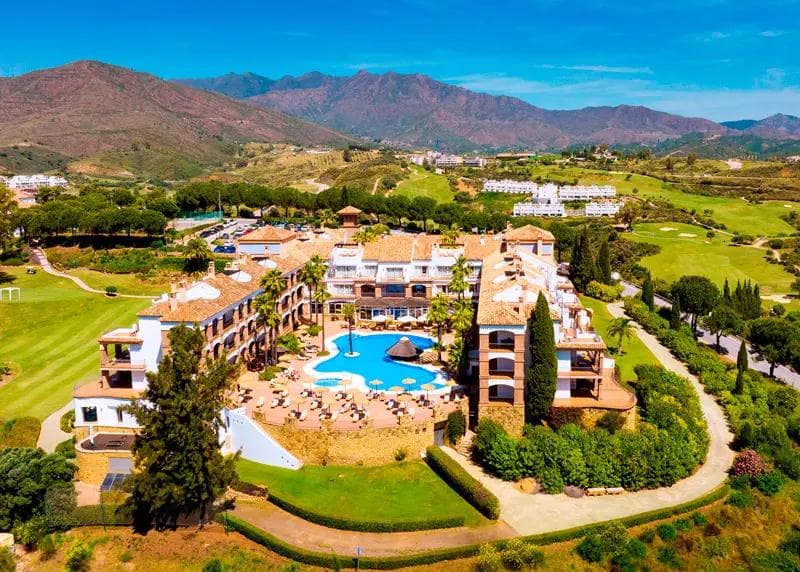
Ten minutes up the MA-426 from the beach, La Cala Golf Resort has three 18-hole championship courses (America, Europe and Asia), a practice academy and a four-star hotel with spa. It is the biggest non-beach draw in the area, and a serious facility by any measure.
Green fees run from around €50 in low season to €120 in spring and autumn peak. The courses are in good condition year-round. Spring and autumn are the best seasons for golf here: the temperatures are 15 to 22 degrees, the fairways are not baked out, and the resort is noticeably quieter than in peak summer. In August, playing in the afternoon is not sensible — the heat is uncomfortable by mid-morning.
Non-golfers are welcome at the hotel and spa. The outdoor pool and restaurant are open to day visitors; the spa has treatments available without an overnight stay.
The Sierra de Mijas
The hills directly behind La Cala form part of the Sierra de Mijas Natural Park. The landscape changes quickly as you climb: scrub oak, wild rosemary, and eventually open ridge lines with views south to Africa on a clear day and north toward the Sierra Nevada. La Cala Golf Resort sits in the lower reaches of this range, and the surrounding hills have walking tracks accessible from the resort's upper car parks.
If you want proper hiking rather than a beach day, spring and autumn are the seasons for it. The terrain is dry and exposed and the summer heat makes any significant climb uncomfortable after 9am.
Day Trips from La Cala
La Cala sits at a useful midpoint on the Costa del Sol. Fuengirola is 15 minutes by car and has a good Tuesday market. Marbella is around 20 minutes and worth half a day for the old town and Puerto Banus. Mijas Pueblo is a 20-minute drive uphill: the same Sierra de Mijas, but the whitewashed village side rather than the golf resort side.
For longer excursions, Ronda is about an hour by car over the mountains and makes a good day out if the weather is suitable. Caminito del Rey — the famous mountain gorge walk near El Chorro — is about 90 minutes from La Cala and worth booking in advance if you are visiting between March and October.
A La Cala day trips page is in progress with full transport details for each option.
When to Go
May to June and September to October are the best months for outdoor activities. The temperature is comfortable, the beaches are not at capacity, and the coastal walk and tower visits are easy without an early start.
July and August are fine for beach days, but get to Playa de La Cala before 10am to secure a spot. The markets get busy on Saturday mornings. The coastal walk and Sierra de Mijas hiking should be done before 9am. Golf in this period is manageable early in the morning; afternoon rounds are uncomfortable.
November to March is quiet. The beach is empty, the golf is peaceful, and the Sendero Litoral is pleasant on sunny winter days. Most beach concessions are closed, and some restaurants operate reduced hours.
Top La Cala Activities & Tours
Where to stay in Mijas Costa

Frequently Asked Questions
More in La Cala de Mijas: Guide to the Costa del Sol's Best-Kept Secret

La Cala Golf Resort: Courses, Green Fees and What to Expect
La Cala Golf Resort has three 18-hole championship courses in the Sierra de Mijas hills, a four-star hotel and a full spa. Here is what each course is like, what green fees cost, and how to make the most of a visit.
Read more →
La Cala de Mijas Beach: What to Know Before You Go
Playa de La Cala is a broad Blue Flag beach with calm water, a good line of chiringuitos and noticeably fewer crowds than the strips in Fuengirola or Torremolinos. Here is what to expect, what it costs and where to park.
Read more →
Where to Eat in La Cala de Mijas: Restaurants and Bars Worth Knowing
La Cala de Mijas has moved well beyond the standard resort seafront. You will find proper grilled fish, good Spanish tapas and a handful of restaurants that would hold their own in Marbella at prices that have not fully caught up with the quality.
Read more →